

Good morning bag lovers! It’s finally FRIDAY! Thank heavens for that. Today I want to get into a hot topic - Loewe’s Anagram.
If you' saw their Spring/Summer 2026 Collection, you’ll know what we’re talking about. And if not - take a seat! Let me fill you in.
Loewe SS 26

For SS26 Lowe showcased a handful of new handbags and ready-to-wear pieces featuring their iconic Anagram but…cut in half. Naturally, this brought some controversy and heated discussion - some love it, some hate it, and some just don’t think it’s a big deal (I’m on the latter end here folks).
So it got me thinking - what even is the history of the Anagram? Loewe is one of the oldest luxury leather houses out there, with its roots dating back to 1846. But, it wasn’t named “Loewe” until 1872 (and even then it was “E. Loewe”), so when did the Anagram come into play?
Anagram History
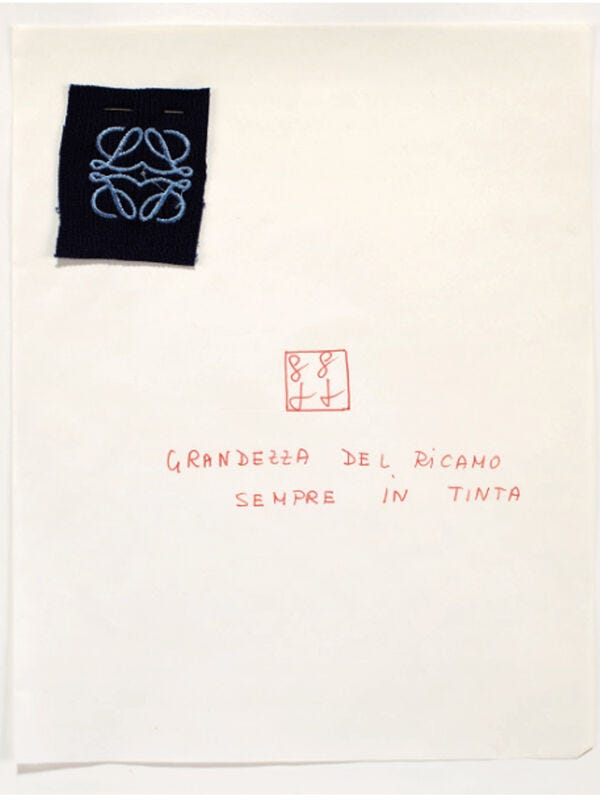
Surprisingly, it wasn’t until 1970 that the Anagram was born. It was designed by artist Vicente Vela, and it was inspired by the branding irons that were used to mark high quality leathers at the time. This, of course, made sense to me - what with Loewe being a high quality leather house themselves. It wasn’t so much the branding irons themselves that were the inspiration but rather, the way the metal was bent and curved to create specific symbols.
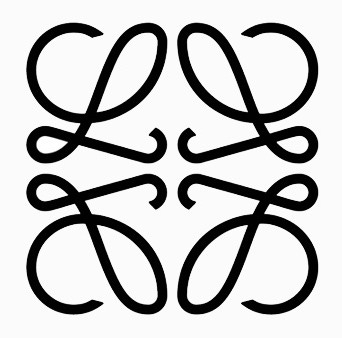
The Anagram is comprised of four L’s, arranged together to create a seamless, recognizable shape. You’ll notice the L is beautifully curved in detail - this is the inspiration of the metal branding irons.
The more you know! Happy weekending, bag lovers
Still hungry? Be sure to visit our website and check out The Menu - curated collections of pre-loved handbags just waiting to be added to your wardrobe.
If you loved this guide, you’ll love what’s coming next. I write about vintage luxury in a way that feels fun, approachable, and never pretentious. Stick around, ask questions, and make yourself at home — you’ve always got a seat at this table.
XO Bags For Breakfast by Shay Prasad
Sources: Loewe.com, Purse Blog, Vogue Runway
Disclaimer: This article is based on publicly available research, archival materials, and my own analysis. I do my best to ensure accuracy, however, this is not a scholarly publication — just a deeply researched love letter to designer fashion.
Image Note: All images in this piece are used for educational and historical commentary. Credits belong to the original creators and rights holders. If you own any of the imagery featured and would like an update or removal, please contact me and I’ll address it immediately.